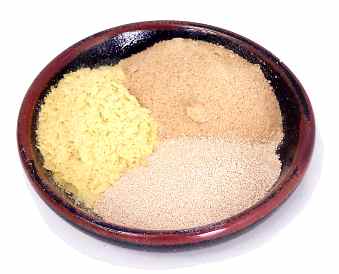
yeast Notes: Yeast is a
one-celled fungus that converts sugar and starch into carbon dioxide
bubbles and alcohol. This has made it a useful ally in the
production of bread, beer, and wine. There are many
varieties of yeast. Bread is made with baker’s yeast, which
creates lots of bubbles that become trapped in the dough, making the
bread rise so it’s light and airy when baked. A small amount of
alcohol is also produced, but this burns off as the bread
bakes. Beer yeast and wine yeast are used to convert sugar
into alcohol and, in the case of beer and champagne, bubbles. You
should never eat raw active yeast, since it will continue to grow in
your intestine and rob your body of valuable nutrients. But once
deactivated through pasteurization, yeast is a good source of
nutrients. Brewer’s yeast and nutritional yeast, for example, are
sold as nutritional supplements, and Australians are fond of yeast
extracts–like Vegemite, Marmite, and Promite–which they spread like
peanut butter on bread.
Varieties:
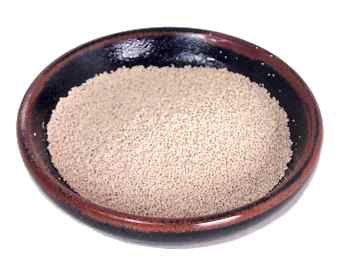
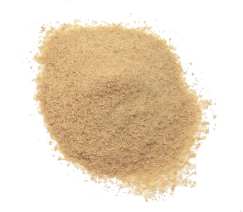
active dry yeast = dry yeast
Equivalents: One package = 2 1/4 teaspoons = 1/4
ounce Notes: This is the yeast
called for by most bread recipes. It’s largely displaced the fresh
yeast our grandparents used since it has a longer shelf life and is more
tolerant of mishandling. To activate it, sprinkle it on
water that’s 105° – 115° F and wait for it to begin foaming (about five
minutes). Look for it in the dairy case–it’s usually sold in
strips of three packages or in 4-ounce jars. Always check the
expiration date to make sure it’s fresh. Dry yeast can be stored
at room temperature until the expiration date–or within 4 months of
opening–but it lasts even longer in the refrigerator or freezer.
Always bring yeast to room temperature before you use it.
It’s important to keep stored yeast away from air and moisture, so use
the smallest container you can find and seal it well.
Substitutes: fresh yeast (Substitute one cake for
each package or 2 1/4 teaspoons of active dry yeast.) OR instant yeast
(Substitute measure for measure, but don’t dissolve it in liquid
first. Your bread will only need to rise once.) OR bread machine
yeast (Substitute measure for measure, but don’t dissolve it in liquid
first. Your bread will only need to rise once.)
baker’s yeast = baking yeast = bread yeast
Equivalents: 1 tablespoon = 1 package = 1 cake
Notes: This is used as a leaven in
breads, coffeecakes, and pastries like croissants and brioche. It
works by converting sugar into carbon dioxide, which causes the dough to
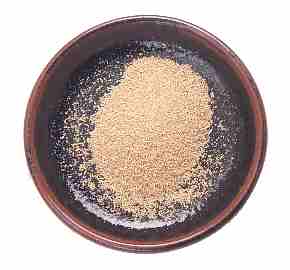
rise so the bread will be light and airy. Yeast comes either as
dry granules or moist cakes. It becomes less potent after
the expiration date stamped on the package, so dough made with it may
take longer to rise, or not rise at all. If the potency of the
yeast is in doubt, test or “proof” it by putting some of it in warm
water (105° – 115° F) mixed with a bit of sugar. If it doesn’t get
foamy within ten minutes, you’ll need to get fresher
yeast.
beer yeast = brewer’s yeast
Notes: This is used to produce alcohol and bubbles in
beer. There are several varieties, each matched to specific
varieties of beer. It’s available either as a liquid or
powder at beer-making supply stores. Don’t confuse this with the
brewer’s yeast that’s used as a nutritional supplement. That type
of yeast is deactivated, so it won’t produce any alcohol or
bubbles.
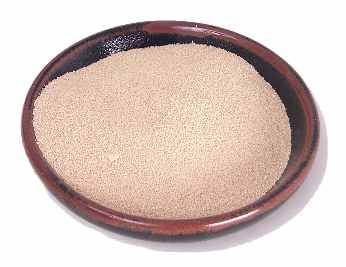
bread machine yeast Equivalents:
One package active dry yeast = 2 1/4 teaspoons bread machine
yeast Notes: This
type of dry yeast is highly active and very finely granulated so that it
hydrates quickly. Breads made with this yeast require only a
single rise, so this yeast is handy to use in a bread machine.
Most machines will have you add this yeast last, on top of the dry
ingredients. If you’re not using a bread machine, add this yeast
to the flour and other dry ingredients. It’s often sold in
4-ounce jars. You can store unopened jars at room temperature
until the expiration date stamped on the jar, but the yeast lasts even
longer in the refrigerator or freezer. If you freeze yeast,
let it come to room temperature before using. Substitutes:
instant yeast (This is very similar. One envelope active
dry yeast = 2 1/4 teaspoons bread machine yeast) OR active dry yeast
(One envelope active dry yeast = 2 1/4 teaspoons bread machine
yeast. Ordinary active dry yeast needs to be dissolved in
water first, and the bread will need to rise more than once.) OR
compressed yeast (Substitute one cake for each package or 2 1/4
teaspoons of dry yeast. This needs to be dissolved in water first,
and the bread will need to rise more than once.)
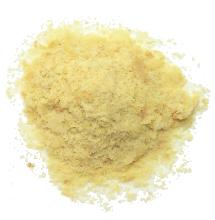
brewer’s yeast Notes:
This inactive yeast is rich in protein and B
vitamins, and it’s used a nutritional supplement. It’s a
by-product of beer-making, which gives it a slightly bitter
flavor. If you object to the bitterness, try nutritional yeast,
which is made from the same yeast strain but grown on molasses.
It’s more expensive but has a more pleasant flavor. You can also
buy debittered brewer’s yeast. Brewer’s yeast comes
powdered (the most potent form), in flakes (best for health shakes), and
in tablets. Don’t confuse this with active forms of yeast, like
the kinds bakers, brewers, and winemakers use. If you eat them,
active yeasts will continue to grow in your intestine, robbing your body
of valuable nutrients. Substitutes:
nutritional yeast (better, nuttier flavor, lighter color)
OR yeast extract
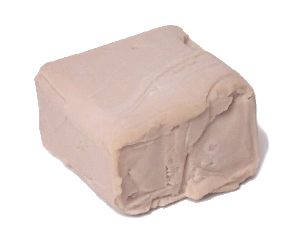
fresh yeast = compressed yeast = active fresh yeast =
cake yeast = baker’s compressed yeast = wet
yeast Equivalents:
2-ounce cake = 3 X 0.6-ounce cakes Notes: This
form of yeast usually comes in 0.6-ounce or 2-ounce foil-wrapped
cakes. It works faster and longer than active dry yeast, but
it’s very perishable and loses potency a few weeks after it’s
packed. It’s popular among commercial bakers, who can keep ahead
of the expiration dates, but home bakers usually prefer dry yeast.
To use, soften the cake in a liquid that’s 70° – 80° F. Store
fresh yeast in the refrigerator, well wrapped, or in the freezer, where
it will keep for up to four months. If you freeze it, defrost it
for a day in the refrigerator before using.
Substitutes: active dry yeast (Substitute one
package or 2 1/4 teaspoons for each .6-ounce cake of compressed yeast)
OR instant yeast (Substitute one package or 2 1/4 teaspoons for each
cake of compressed yeast) OR bread machine yeast (Substitute 2 1/4
teaspoons for each cake of compressed yeast)
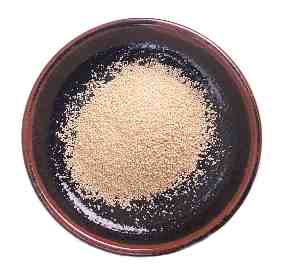
instant yeast = quick yeast = rapid rise active dry
yeast = quick rise active dry yeast = fast-rising active dry
yeast = fast rising yeast Equivalents: One
package = 2 1/4 teaspoons = 1/4 ounce
Notes: This very active strain of yeast allows
you to make bread with only one rise. The trade-off is that some
flavor is sacrificed, though this doesn’t matter much if the bread is
sweetened or heavily flavored with other ingredients. Unlike
ordinary active dry yeast, instant yeast doesn’t need to be dissolved in
liquid first–you just add it to the dry ingredients. Look for it
in the dairy case–it’s usually sold in strips of three packages or in
4-ounce jars. Before buying it, check the expiration date to
make sure it’s fresh. Dry yeast can be stored at room temperature
until the expiration date stamped on the jar, but it lasts even longer
in the refrigerator. Substitutes: bread
machine yeast (very similar; substitute measure for measure.) OR active
dry yeast (Substitute measure for measure. Active dry yeast needs to be
dissolved in water first, and the bread will need to rise more than
once.) OR fresh yeast (Substitute one cake for each package or 2 1/4
teaspoons of dry yeast. This needs to be dissolved in water first,
and the bread will need to rise more than once.)
smoked yeast = bacon yeast = hickory-smoked yeast
Notes: This is yeast that’s been smoked, giving it a
bacon-like flavor. It’s used to flavor other dishes. Don’t confuse
it with active forms of yeast, like the kinds bakers, brewers, and winemakers
use. If you eat them, active yeasts will continue to grow in your
intestine, robbing your body of valuable nutrients.
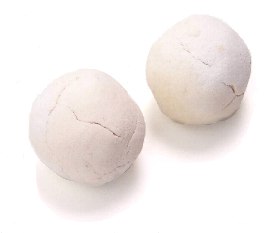
wine ball = wine cube Notes:
These are balls of brewer’s yeast that are sold in Asian
markets. They’re used to make wine.
wine yeast Notes: This
is used to convert the sugar in fruit juices into alcohol and carbon
dioxide. There are different varieties, each best suited to
producing a certain wine. Champagne yeast, for example, produces
more bubbles than other forms of wine yeast.
yeast extract
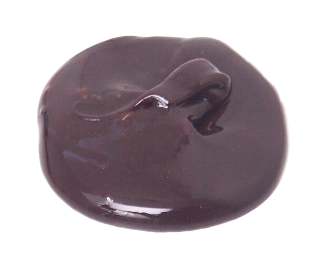
Notes: This is a nutritious,
pungent, and salty paste that’s popular in Australia, New Zealand, and
Great Britain. It’s often spread with butter on bread, or mixed
with hot water to make a drink Popular brands include
Vegemite®, Marmite®, which is sweeter and perhaps a bit
more palatable to Americans, and Promite®, which is sweeter yet
but hard to find. Substitutes: miso
OR beef extract OR peanut butter
yeast starter = sponge = levain Equivalents:
2 cups yeast starter = 1 package active dry yeast
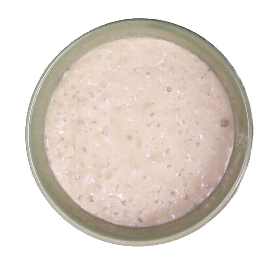
Notes: A starter is a mixture of flour, water,
and other ingredients that’s been colonized by wild airborne yeast and
friendly bacteria. These one-celled immigrants lend the
starter–and the breads made with it–a special character.
Sourdough starter, for example, contains a strain of yeast that’s
tolerant of the lactic and acetic acids produced by the
lactobacilli. Those acids give sourdough bread its characteristic
tang. The French use a soupy starter called a poolish to
make their breads, while the Italians use a thicker one called a
biga. Up until the late 19th century, all yeast breads were
leavened with starters, and keeping a starter alive in its crock was a
routine household chore. To keep your own starter alive, wait
until it’s established, then store it in an airtight container in the
refrigerator. To keep it healthy, bring it to room temperature
once a week and remove all but about 25% of it (either make bread with
it or discard it). Replace what you’ve taken with a mixture of
equal parts warm water and flour, stir, then return it to the
refrigerator. Properly maintained, a starter can last for decades,
developing an ever more distinctive character as it ages. To
use a starter to make bread, remove some of it (usually about 2 cups),
and use it in place of other forms of yeast. Replace the amount
you took with a mixture of equal parts flour and warm water.
Discard your starter if it becomes orange or pink, or if it develops an
unpleasant odor. It’s easy to make starters from scratch,
but even easier to borrow some from a friend. Since sourdough
starters must be colonized by strains of yeast and lactobacilli that are
particular to certain regions (like San Francisco), a homemade starter
might not yield sour bread. Your best bet is to get a
powdered sourdough starter mix from your supermarket or a mail order
supplier. To make your own: Sprinkle 1
package of active dry yeast on 2 cups of warm water, wait 10 minutes,
then stir in 2 cups of flour. Cover loosely, and let the mixture
sit at about 85°.